02-27217300
02-27217179
service@siloahtravel.com
Monday ~ Friday 09:00-18:00
14F.-3, No.137, Sec. 1, Fuxing S. Rd., Da’an Dist., Taipei City 106, Taiwan
Representative: Tung-Hua Tai
VAT: 43871553
交觀甲793500 品保北2260 隱私權條款
Copyright © 2025 Siloah Travel Co., Ltd.. All rights reserved.

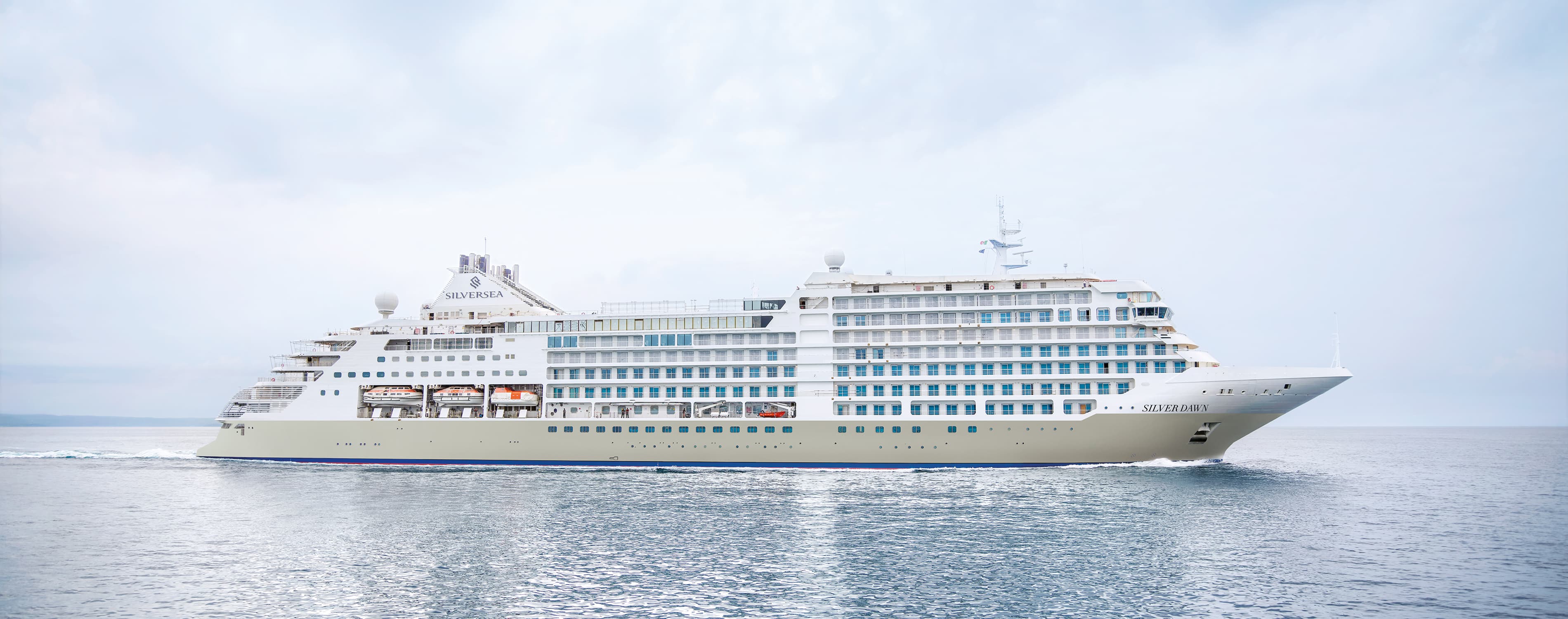
Silver Dawn
Silversea


One of the glitziest places on the planet, the City of Angels combines the people-watching of Rodeo Drive, the nonstop nightlife of the Sunset Strip, and the star quality of the Hollywood Walk of Fame. World-class art museums like the Getty and such jaw-dropping architectural gems as the Walt Disney Concert Hall turn heads. In this top dining destination, the taco stands and celebrity-filled eateries win equal acclaim. The weather in Los Angeles is ideal year-round, so bust out your sunglasses and cruise with the top down to the beach or even to Disneyland.

Days at sea are the perfect opportunity to relax unwind and catch up with what you’ve been meaning to do. So whether that is going to the gym, visiting the spa, whale watching, catching up on your reading or simply topping up your tan these blue sea days are the perfect balance to busy days spent exploring shore side.

Known as the Garden Isle, Kauai is the northernmost and geologically oldest of the Hawaiian Islands. Nearly circular in shape, only three percent of the land area has been developed for residential and commercial use, with the remaining 97 percent divided between agriculture and conservation. The majority of the island’s population of 52,000 lives and works in the coastal areas. The interior of the island is spectacularly beautiful and pristine. In the centre rises Mount Waialeale, a remnant of an extinct volcano that gave birth to the island. In 1778, Captain Cook anchored the Resolution and Discovery off Kauai at the mouth of the Waimea River, 25 miles (40 km) west of the capital of Lihue. This was Hawaii’s first contact with Western civilisation. Nawiliwili Harbor was established as Kauai’s principal port in 1930. It was named for the Wiliwili trees that were once abundant in the area. Kauai’s near perfect year-round temperatures and the refreshing breezes from the northeast trade winds attract thousands of travellers each year to this island paradise.

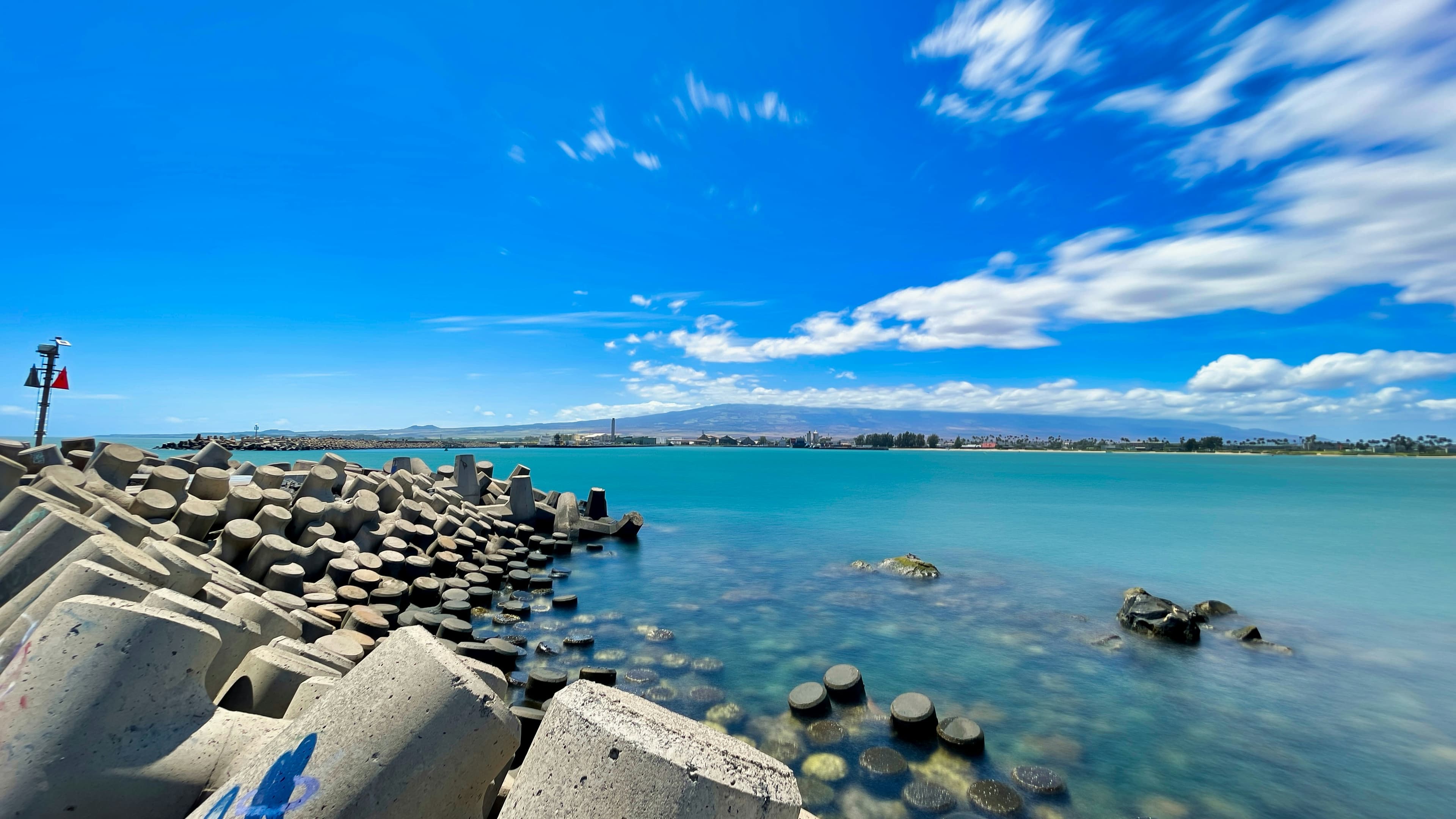
Nestled on the enchanting island of Maui, Kahului is a gateway to breathtaking landscapes and vibrant culture. Here, the gentle waves of the Pacific embrace sun-drenched beaches, while lush rainforests and majestic peaks invite exploration. Don’t miss the chance to experience the iconic Road to Hana, a scenic drive through cascading waterfalls and dramatic coastal views. Indulge in local delicacies at bustling markets, immerse yourself in Hawaiian traditions, or simply relax in the island's serene beauty. Kahului promises an unforgettable escape into paradise, where every moment is a treasure waiting to be discovered.

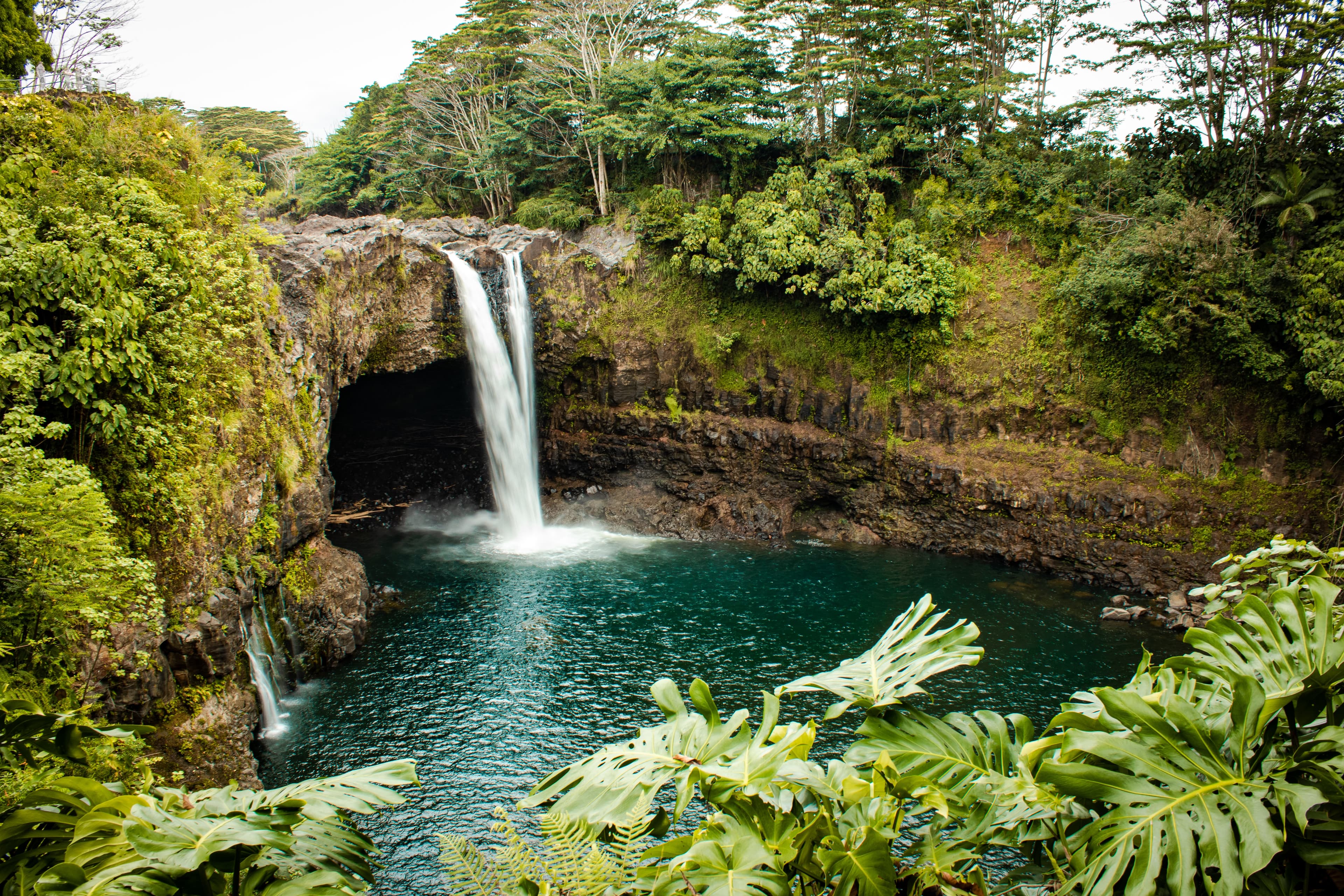
In comparison to Kailua-Kona, Hilo is often described as "the old Hawaii." With significantly fewer visitors than residents, more historic buildings, and a much stronger identity as a long-established community, this quaint, traditional town does seem more authentic. It stretches from the banks of the Wailuku River to Hilo Bay, where a few hotels line stately Banyan Drive. The characteristic old buildings that make up Hilo's downtown have been spruced up as part of a revitalization effort.
Nearby, the 30-acre Liliuokalani Gardens, a formal Japanese garden with arched bridges and waterways, was created in the early 1900s to honor the area's Japanese sugar-plantation laborers. It also became a safety zone after a devastating tsunami swept away businesses and homes on May 22, 1960, killing 60 people.
With a population of almost 50,000 in the entire district, Hilo is the fourth-largest city in the state and home to the University of Hawaii at Hilo. Although it is the center of government and commerce for the island, Hilo is clearly a residential town. Mansions with yards of lush tropical foliage share streets with older, single-walled plantation-era houses with rusty corrugated roofs. It's a friendly community, populated primarily by descendants of the contract laborers—Japanese, Chinese, Filipino, Puerto Rican, and Portuguese—brought in to work the sugarcane fields during the 1800s.
One of the main reasons visitors have tended to steer clear of the east side of the island is its weather. With an average rainfall of 130 inches per year, it's easy to see why Hilo's yards are so green and its buildings so weatherworn. Outside of town, the Hilo District has rain forests and waterfalls, a terrain unlike the hot and dry white-sand beaches of the Kohala Coast. But when the sun does shine—usually part of nearly every day—the town sparkles, and, during winter, the snow glistens on Mauna Kea, 25 miles in the distance. Best of all is when the mists fall and the sun shines at the same time, leaving behind the colorful arches that earn Hilo its nickname: the City of Rainbows.
The Merrie Monarch Hula Festival takes place in Hilo every year during the second week of April, and dancers and admirers flock to the city from all over the world. If you're planning a stay in Hilo during this time, be sure to book your room well in advance.


Here is Hawaii's only true metropolis, its seat of government, center of commerce and shipping, entertainment and recreation mecca, a historic site, and an evolving urban area—conflicting roles that engender endless debate and controversy. For the visitor, Honolulu is an everyman's delight: hipsters and scholars, sightseers and foodies, nature lovers and culture vultures all can find their bliss.
Once there was the broad bay of Mamala and the narrow inlet of Kou, fronting a dusty plain occupied by a few thatched houses and the great Pakaka heiau (shrine). Nosing into the narrow passage in the early 1790s, British sea captain William Brown named the port Fair Haven. Later, Hawaiians would call it Honolulu, or "sheltered bay." As shipping traffic increased, the settlement grew into a Western-style town of streets and buildings, tightly clustered around the single freshwater source, Nuuanu Stream. Not until piped water became available in the early 1900s did Honolulu spread across the greening plain. Long before that, however, Honolulu gained importance when King Kamehameha I reluctantly abandoned his home on the Big Island to build a chiefly compound near the harbor in 1804 to better protect Hawaiian interests from the Western incursion.
Two hundred years later, the entire island is, in a sense, Honolulu—the City and County of Honolulu. The city has no official boundaries, extending across the flatlands from Pearl Harbor to Waikiki and high into the hills behind.
The main areas (Waikiki, Pearl Harbor, Downtown, Chinatown) have the lion's share of the sights, but greater Honolulu also has a lot to offer. One reason to venture farther afield is the chance to glimpse Honolulu's residential neighborhoods. Species of classic Hawaii homes include the tiny green-and-white plantation-era house with its corrugated tin roof, two windows flanking a central door and small porch; the breezy bungalow with its swooping Thai-style roofline and two wings flanking screened French doors through which breezes blow into the living room. Note the tangled "Grandma-style" gardens and many ohana houses—small homes in the backyard of a larger home or built as apartments perched over the garage, allowing extended families to live together. Carports, which rarely house cars, are the island's version of rec rooms, where parties are held and neighbors sit to "talk story." Sometimes you see gallon jars on the flat roofs of garages or carports: these are pickled lemons fermenting in the sun. Also in the neighborhoods, you find the folksy restaurants and takeout spots favored by the islanders.

Days at sea are the perfect opportunity to relax unwind and catch up with what you’ve been meaning to do. So whether that is going to the gym, visiting the spa, whale watching, catching up on your reading or simply topping up your tan these blue sea days are the perfect balance to busy days spent exploring shore side.

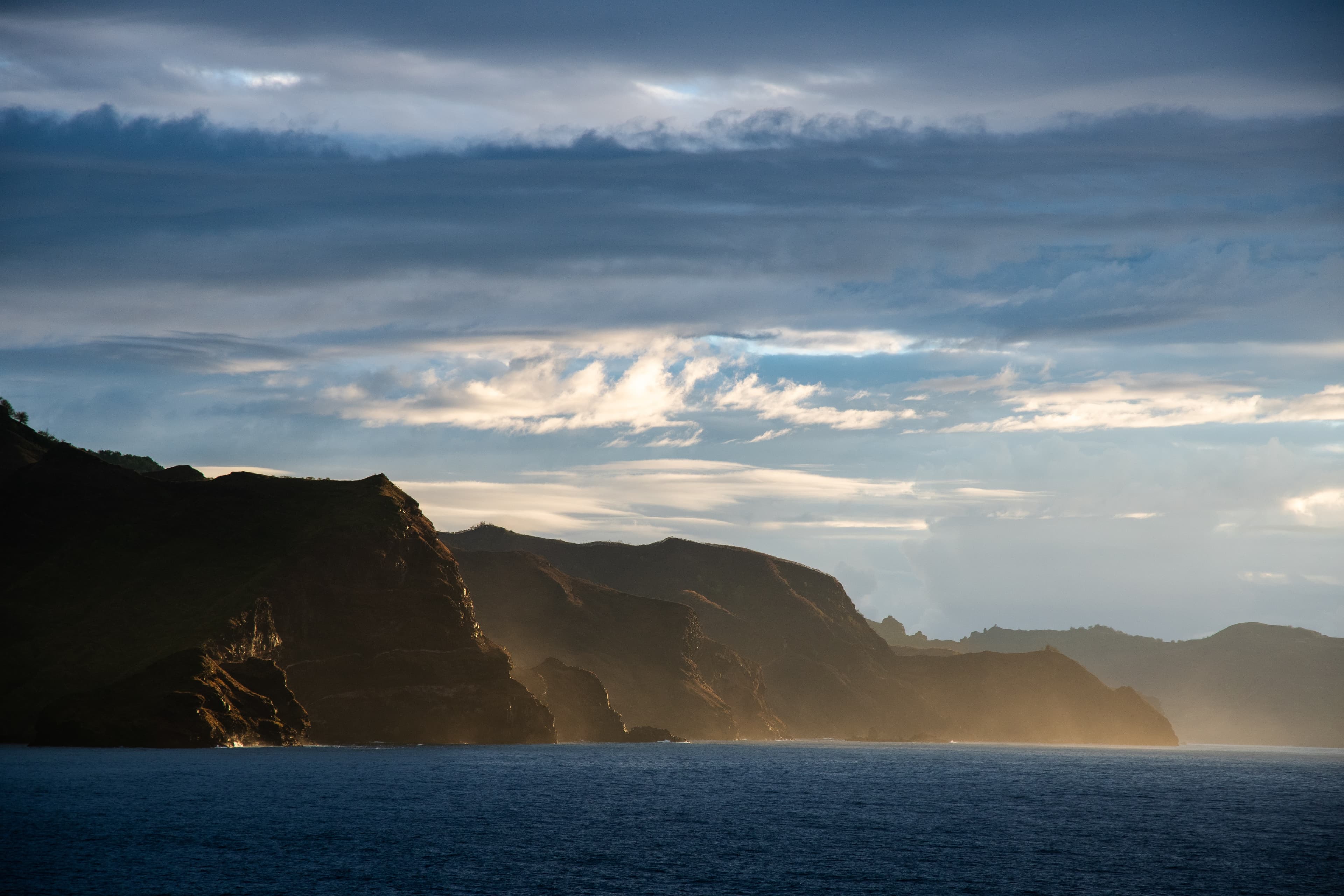
Think of French Polynesia and you are automatically transported to the white sands of Tahiti, the blue seas of Bora Bora or, at the very least, the iconic statues of Easter Island. Now, imagine a place that is home to that majestic trinity, but has no crowds and is full of island authenticity that is rare in these global times. You have just imagined Nuku Hiva.The island is the second largest after Tahiti in the archipelago, but is yet to be discovered by tourism. As part of the Marquesas Islands, Nuku Hiva is technically French, but don’t expect to find any blue and white striped shirts here! In fact, even though French is the “official” language of the island, a sing-song dialect of Tahitian mixed with Marquesan is more widely spoken. The younger generations also speak English.Undeniably, Nuku Hiva has been blessed by the Gods. With towering mountains, eight magnificent harbours, and one of the world's highest waterfalls, Nuku Hiva is rich with Mother Nature’s jewels. The island could lay claim to a great many claims to fame, such as its deep, unpolluted waters, its lush forests bursting with vitality or its fascinating assortment of archaeological interests including tikis (sacred statues) and pae pae (stone platforms that formed the foundations of houses). Yet for those in the know, the island’s primary claim to fame is that author Herman Mellville deserted his ship in order to live among the natives of the island and his books Typee and Omoo were inspired by his experiences on Nuku Hiva.

Days at sea are the perfect opportunity to relax unwind and catch up with what you’ve been meaning to do. So whether that is going to the gym, visiting the spa, whale watching, catching up on your reading or simply topping up your tan these blue sea days are the perfect balance to busy days spent exploring shore side.

Rangiroa is French Polynesia’s largest atoll. More than 400 motu (islets) enclose the lagoon, which is so wide and long that one cannot see the southern row of motu from the two main islets in the north –hence the local name Rangiroa meaning wide or long sky, sometimes taken as “immense sky”. There are several passes from the ocean into the lagoon and the two main villages of Avatoru and Tiputa are located next to the passes of the same names. Drift diving and snorkeling the incoming tides looking for sharks and manta rays at these passes is one of Rangiroa’s main touristic draws. Government jobs, ecotourism and pearl farming are the main sources of income on the atoll. The lagoon’s calm turquoise waters, rich marine underwater world and relaxed atmosphere attract visitors year-round to the many local guesthouses and a few hotels.Both Avatoru and Tiputa also feature schools for the other Tuamotu Islands which have no higher education possibilities. One of Rangiroa’s most unusual attractions is the white and rose wine produced on the islet immediately west of Avatoru –the wine has won several awards.

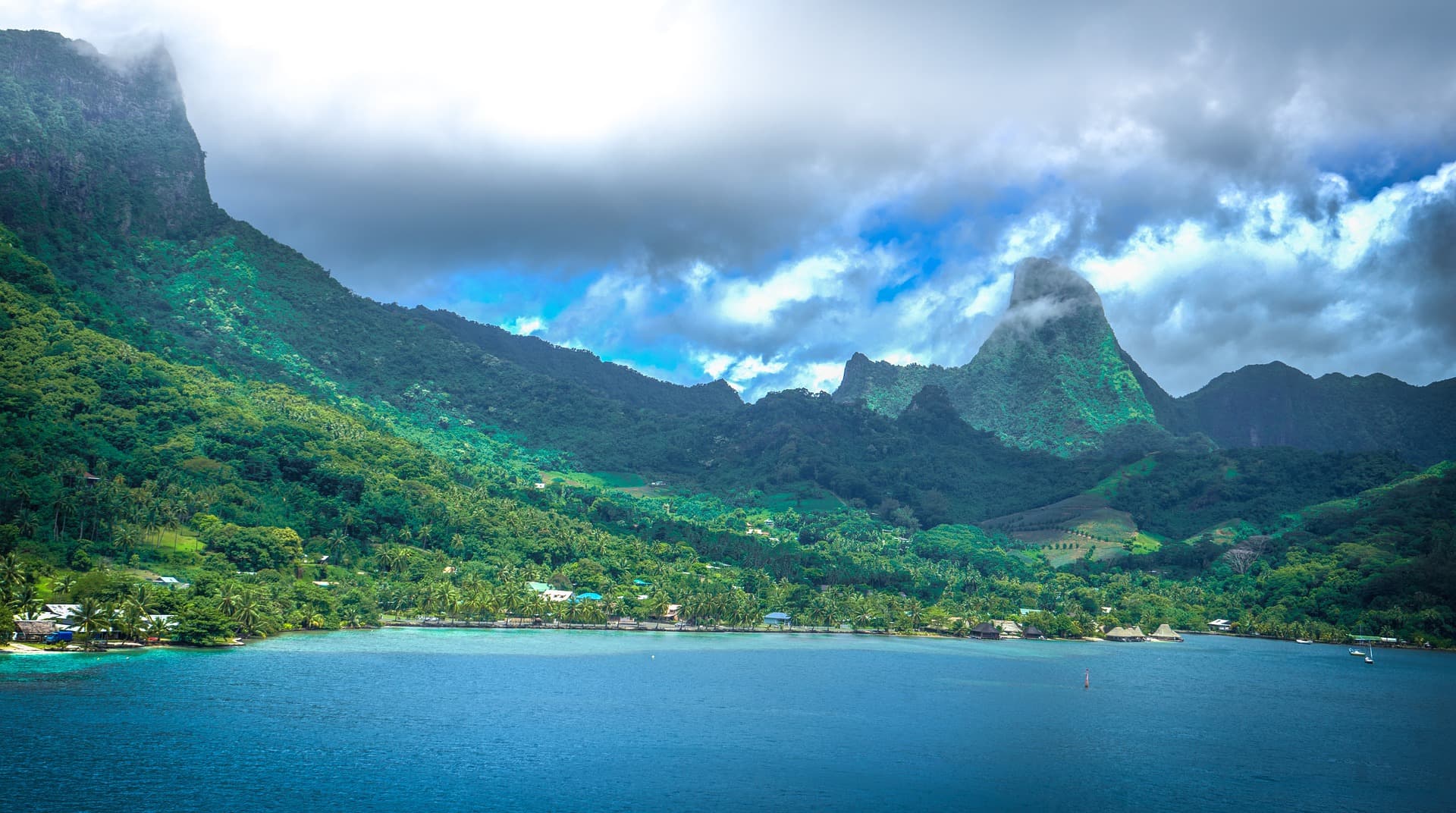
Moorea is a high mountainous island with two nearly symmetrical bays found on the north coast. The island’s triangular shape has been likened to a heart or a bat. Eight mountain peaks reaching a height of up to 1,207 meters give Moorea a very rugged silhouette. The reef surrounding the island encloses a narrow lagoon –a RAMSAR Wetland- and has barely any motu (reef islets). Sharks and rays are some of the lagoon’s attractions. The island is only one eighth the size of neighboring Tahiti and has a more relaxed life-style.A road leads around Moorea, passing small villages with their churches and the resorts and smaller hotels mainly found on the north coast. A detour into the interior will show large pineapple plantations, French Polynesia’s only agricultural school, ancient marae (stone platforms) and splendid views of the island from Belvedere above Cook’s Bay or the Magic Mountain above Papetoai, Opunohu Bay.Many of the 18,000 residents work in Tahiti, taking one of the ferries plying between Vaiare on the east coast and Papeete. This led to Papeete being one of France’s busiest ports in passenger volume. Foreign visitors either come into Temae airport, tucked in-between the Green Pearl golf course and Temae’s public beach, or by ship entering one of the two bays on the north coast. Both bays are connected to Captain Cook’s visit in 1777: he stayed in Opunohu Bay, but to honor him Pao Pao Bay has been named Cook’s Bay.

Known as the "Sacred Island," Raiatea is a fascinating haunt for archaeologists and historians as it's one of the islands in the Pacific where Polynesian culture can trace its roots. Visitors will find many of the older Polynesian structures still in place and are fascinating places to explore. In the 16th century, Raiatea developed a powerful cult dedicated to Oro the God of War and built a large meeting ground, the Taputaputea Marae, which is still intact. Human sacrifice was practiced until around the middle of the 18th century and visitors should look for the sacrificial stone. Several tour operators run visits to the marae (ancient temples) along with some degree of informed commentary—although in fairness Polynesian storytelling can embellish things a little. The Faaroa River is the only navigable waterway in French Polynesia and it can be traveled by powerboat or outrigger canoe. Running through the Faaroa Gorge it passes some spectacular scenery with steep-walled jungle foliage holding dozens of bird species and wild hibiscus. Trekking up Mount Temehani, a well-known landmark that's said to be Oro's birthplace, is relatively demanding. Keep a lookout for the rare, five-petal tiare apetahi. Said to be impossible to grow anywhere else, this white, indigenous flower can only be found above 1,300 feet (396 meters). Look, but don't touch. It's against the law to pick them.

Papeete is the center of the tropical paradise of French Polynesia where islands fringed with gorgeous beaches and turquoise ocean await to soothe the soul. This spirited city is the capital of French Polynesia and serves as a superb base for onward exploration of Tahiti – an island of breathtaking landscapes and oceanic vistas. A wonderful lagoon of crisp clear water begs to be snorkelled stunning black beaches and blowholes pay tribute to the island's volcanic heritage and lush green mountains beckon you inland on adventures as you explore extraordinary Tahiti. Visit to relax and settle into the intoxicating rhythm of life in this Polynesian paradise.

If you have ever dreamt up your ideal island holiday, we suspect it goes something like this: Soapy blue seas? Check. Sparkling white beaches? Check. Thatched wooden huts, gently sloping palm trees and kaleidoscopic marine life? Check, check and check. And yet, even by ticking every box, first time viewing of Bora Bora still beggars belief.This tropical hideaway less than 12 m2 in the heart of the South Pacific has been toping travel wish lists for years. Long considered the realm of honeymooners – spectacularly romantic sunsets are a speciality – Bora Bora is not just for wandering with your love. If the prismatic shades of blue of the world’s most beautiful lagoon do not fill you up, then perhaps underwater scooters and aqua Safaris will charge your batteries. If exploring Bora Bora’s lush hinterland is more your glass of tequila sunrise, then trips around the island (often stopping off at the celebrity haunt Bloody Mary Restaurant & Bar) are a must.Bora Bora's peaceful ambience has not always been the case. The island was a US supply base, known as "Operation Bobcat" during WWII. During this time, Bora Bora was home to nine ships, 20,000 tons of equipment and nearly 7,000 men. Eight massive 7-inch naval cannons were installed around the island, all but one of which is still in place. Although little is known of the history of the island, it is known that Bora Bora was called Vava’u in ancient times. This supports belief that the island was colonised by Tongans prior to French annex in 1888.

Days at sea are the perfect opportunity to relax unwind and catch up with what you’ve been meaning to do. So whether that is going to the gym, visiting the spa, whale watching, catching up on your reading or simply topping up your tan these blue sea days are the perfect balance to busy days spent exploring shore side.

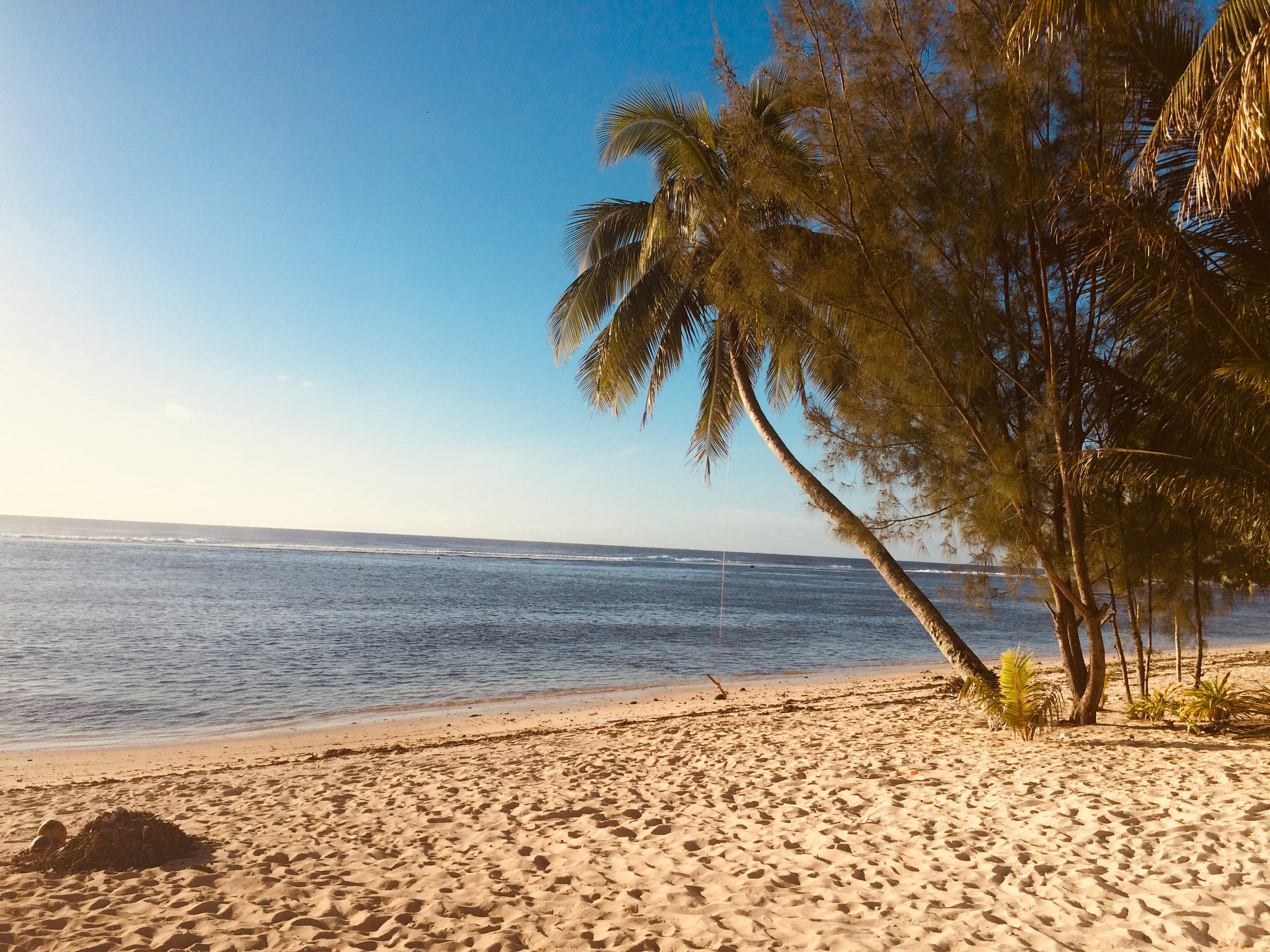
Life is laid back on Rarotonga the most populous of the Cook Islands but the residents are still an active bunch. Though there are plenty of white sandy beaches on which to laze—and people do with plenty of napping— locals love to get out and move. Join them in snorkeling diving riding—bikes horses scooters—fishing bush walking and playing squash and tennis. Another popular if odd and favorite activity is lining up along the sea wall adjacent to the airport's runway to be jetblasted.

Days at sea are the perfect opportunity to relax unwind and catch up with what you’ve been meaning to do. So whether that is going to the gym, visiting the spa, whale watching, catching up on your reading or simply topping up your tan these blue sea days are the perfect balance to busy days spent exploring shore side.

The high, volcanic islands of American Samoa sit along the Pacific Ring of Fire; their cone-shaped mountains rise with abrupt steepness. These islands are stunningly green, the windward hillsides carpeted thickly with coconut palms, breadfruit and mango, while the leeward side is punctuated by steep cliffs. Pago Pago (pronounced Pahngo Pahngo), on the island of Tutuila, boasts one of the world's most beautiful natural harbors that thrusts as a fjordlike arm deep into the land. The harbor was formed when the seaward wall of a volcano collapsed, allowing the sea to rush in. The bay and encircling mountain peaks present spectacular evidence of nature's force and astounding beauty. Introduced to the world in 1722 by a Dutchman, these islands were then visited by English missionaries in 1831; the islanders took to Christianity with enthusiasm. In 1900, in spite of the Germans who controlled Western Samoa, the United States took possession and the U.S. Navy ran American Samoa until 1951. Since then it has been administered by the U.S. Department of the Interior as an Incorporated Territory and thus is a unique part of the United States. Its 50,000 residents are U.S. citizens with equal rights, except for voting in national elections. Pago Pago, along with Fagatogo, is called the Bay Area. It is here where Somerset Maugham's story in his famous novel Rain was set. The story, which was made into a movie with Joan Crawford, was so popular that a hotel was named for the heroine, Sadie Thompson. Today, the former hotel houses a restaurant.The lookout over the harbor and out to sea is stunning, and you can hike up to Mount Alava on what is now National Park Trail. On a clear day, the Manu'a Group and Western Samoa are visible. Back in Pago Pago just below Solo Hill is Maugaoalii, the hill of chiefs, where Government House is located; you may walk around the beautiful grounds or visit the courthouse past the village green.There are a number of good things to do here in the combined town of Pago Pago-Fagatogo; as the island is compressed, it won't take long to accomplish them at a leisurely pace. Pier Information The ship is scheduled to dock at Pago Pago Harbor. The town center is within walking distance. Taxis are generally available at the pier. Shopping Shopping is not particularly exciting in American Samoa. There are small Korean, Samoan and American stores that carry items residents need on a daily basis. A limited selection of handicrafts and Samoan T-shirts are also available. The local currency is the U.S. dollar. Cuisine Stone hearth baked foods such as breadfruit, pork, chicken and bananas are available in most villages, while more international fare is available at restaurants in Pago Pago. Other Sites Fono BuildingHome of the territory's legislature, its architecture combines traditional "fale" construction with modern materials.Naval Guns HillLocated a short distance from the Rainmaker Hotel and requiring a short hike, two guns remain as relics from World War II.
For two hours of every day (between 10 am and 12 pm GMT), the world has three different dates. Planet Earth is divided into 24-different time zones, meaning that when it is 11.30 pm in Samoa (GMT-11), it will be 6.30 am in New York City (GMT-4) and 12.30 am in Kiritimati (GMT +14)! So, for those who travel east, time moves faster over the time zones, and you suddenly find yourself one day older! Just to confuse matters even further, the IDL (International Date Line) is arbitrary, and countries can request to move it as they please! However, regardless of where you are on the planet, the time and date always changes at midnight.

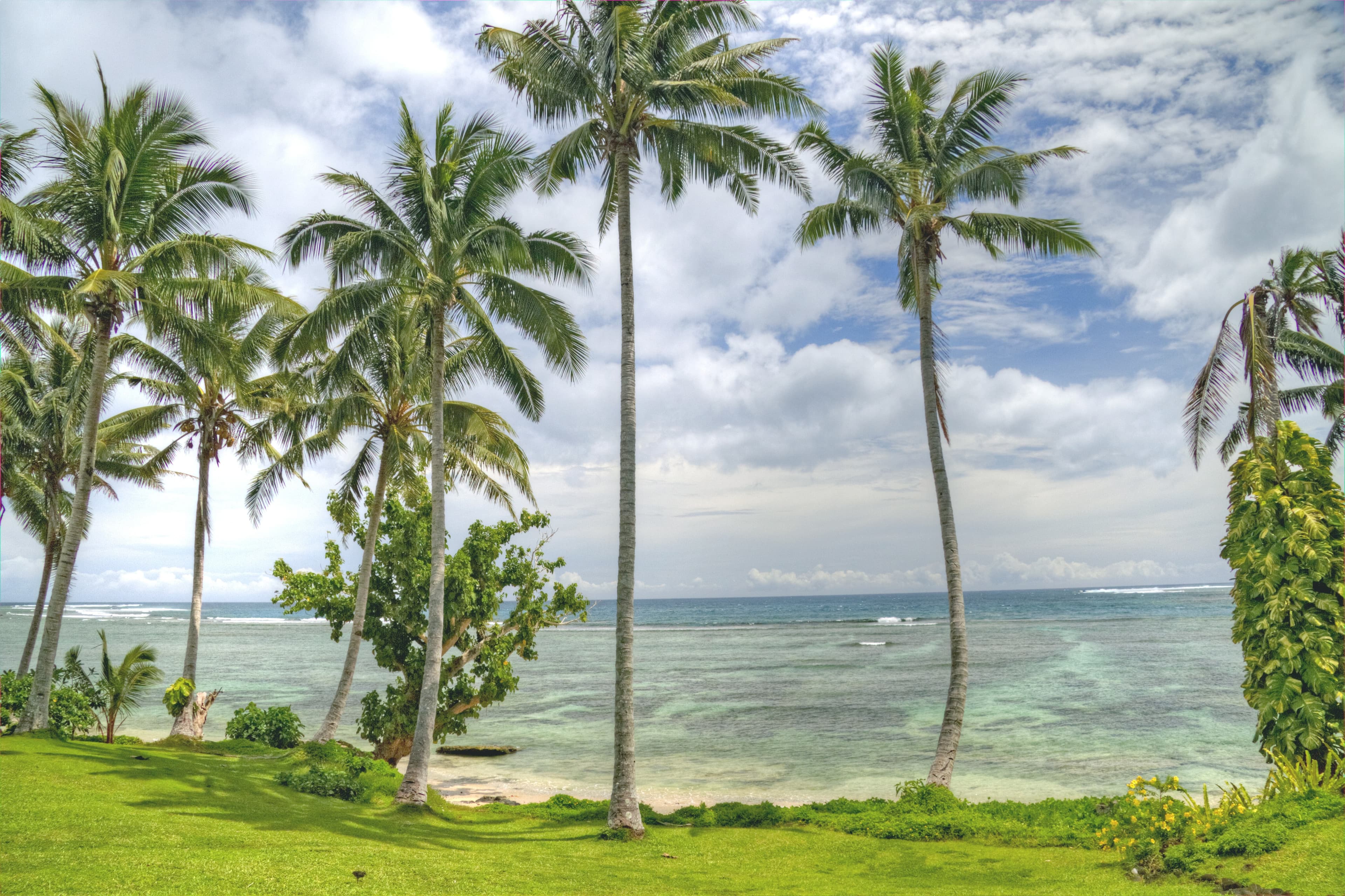
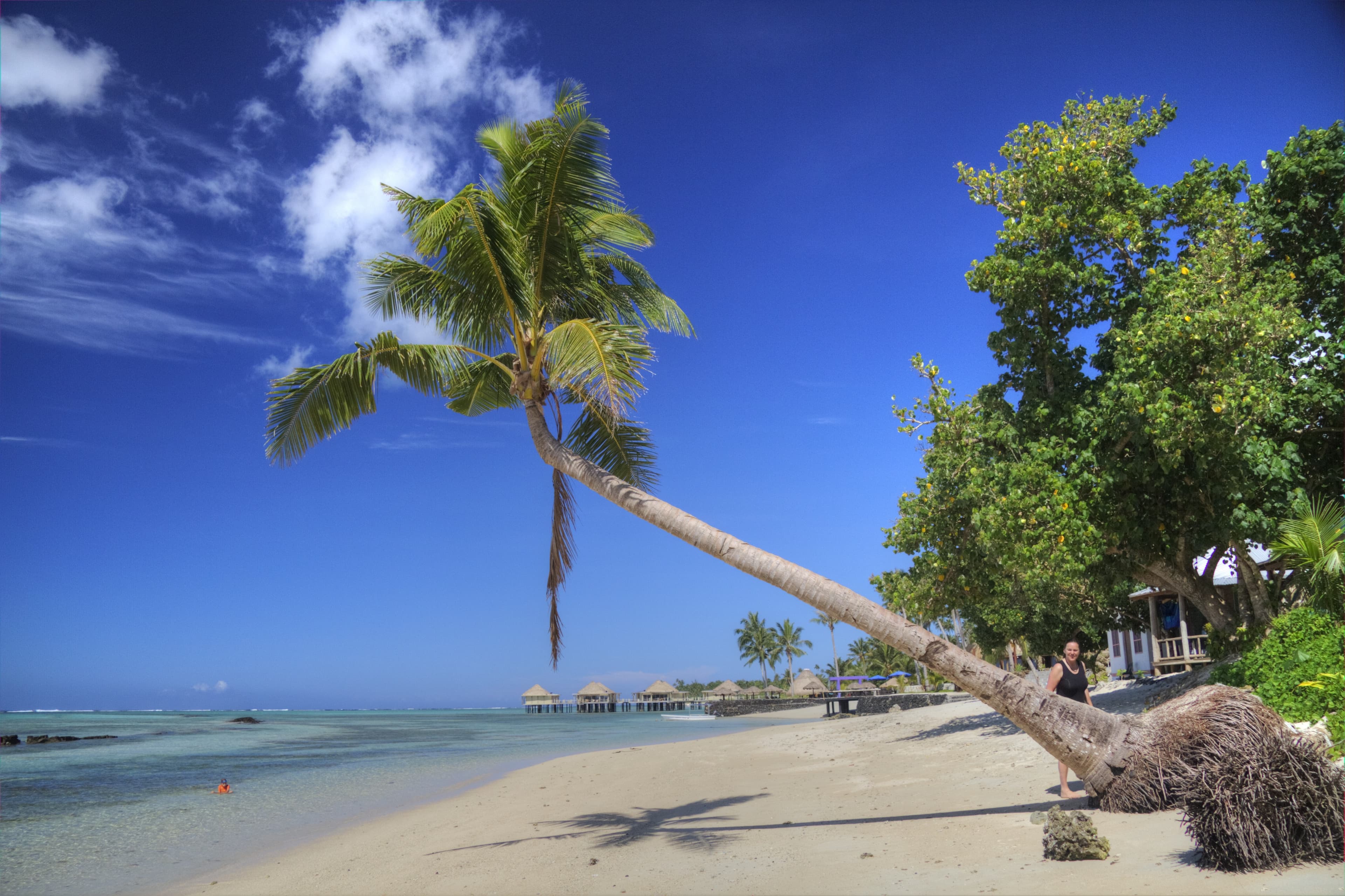
As the first independent state of Polynesia, Samoa is considered the cradle of the nation, a place where the Earth and the heart seamlessly fuse together. Incidentally, were one to translate the word "Samoa" into the traditional Polynesia dialect, they would find that the words "Sa" and "Moa" mean exactly that: earth and centre. Apia, Samoa's only town, is found central north coast of Upolu, Samoa’s second largest island. Originally a tiny village of just over 300 inhabitants (c. 1800), the town’s population has grown to be just shy of 40,000. While a population of such size might mean forgetting traditional roots in favour of modern life, this has not been the case (too much) in Apria. The Samoan way of life is still very much the order of the day; traditional open-sided houses with thatched roofs on platforms of coral or concrete, also known as 'fales', can be seen everywhere and nearly all of the population (including the policemen) wear the typical local dress; skirts, or ‘lavalavas’ for men, and long, mumu-style dresses for women. The markets are bursting with culture and colour, selling everything from handicrafts to cuisine and local produce.If the idyllic setting of aquamarine pools of bluey green water, framed by low fringed palms and huge umbrella trees seems familiar, that’s because it probably is. The island, and notably the southern resort of Lefaga, was used in the 1953 Gary Cooper classic Return to Paradise Beach. It is also the last place on Earth to see each day’s sunset.

Days at sea are the perfect opportunity to relax unwind and catch up with what you’ve been meaning to do. So whether that is going to the gym, visiting the spa, whale watching, catching up on your reading or simply topping up your tan these blue sea days are the perfect balance to busy days spent exploring shore side.

As the Kingdom of Tonga's largest island and capital Nuku'alofa is the hub of city life with Tonga's greatest concentration of hotels restaurants and nightlife. It is also the seat of Tonga's government and the island's historic center where you'll find the royal palace the government and business districts as well as churches the colorful Central Market and ancient vestiges of the island's storied past. As Tonga's only deep-water port Nuku'alofa is also its hub for boat rides and excursions to the many outer islands.

Days at sea are the perfect opportunity to relax unwind and catch up with what you’ve been meaning to do. So whether that is going to the gym, visiting the spa, whale watching, catching up on your reading or simply topping up your tan these blue sea days are the perfect balance to busy days spent exploring shore side.

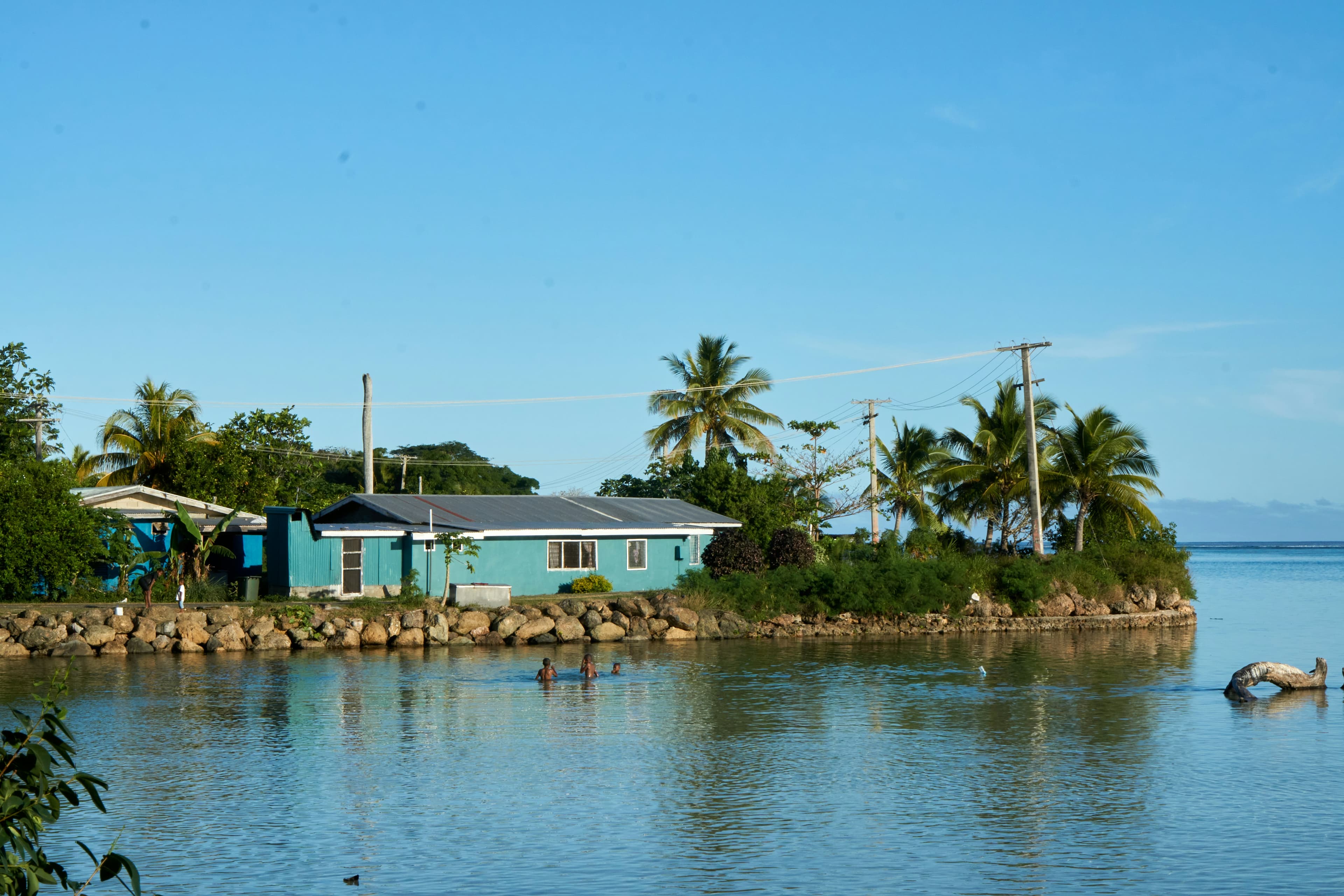
It doesn’t get much sweeter than arriving on the sun-soaked shores of the Sugar City. Fiji’s second-biggest settlement opens up a world of blissful beaches and turquoise seascapes while its dense jungle lures the adventurous deep into its embrace. Experience rich Fijian life and see dramatic displays like warrior dances and remarkable local practices like firewalks which kick up burning embers into the night's sky. Legend says the city took its name after two chiefs faced each other in a duel. A spear pierced one of the chiefs leading to the shout of 'lau-toka!' or 'spear hit!' Sugar is Lautoka’s main trade but its botanical gardens are a sweet insight into the tropical plant life that thrives here - from pearl white lilies to tall fragrant orchids. Explore temples charming cafes and mills - or barter for some of the juiciest mangoes you’ll ever taste at the city’s lively market. You'll only be able to resist the beaches for so long and it doesn’t get much more stunning than the Blue Lagoon - a heavenly blend of woven together turquoise shades. Remote wild and unspoiled these are some of the best tropical beaches in the world. There's more rejuvenating relaxation at the mineral-rich mud pools and spas fuelled by the volcanic activity below. Savala Island is a teardrop of sand offshore and another beautiful place to wander with the soft powder between your toes - along sandy spits that peter out into the water. Or swim and snorkel among its envied reefs thronging with fish life.
Discover the enchanting Kadavu Island in Fiji, a gem of the South Pacific. Renowned for its breathtaking coral reefs and vibrant marine life, it's a haven for divers and snorkelers alike. Explore the lush landscapes and traditional Fijian villages, where warm hospitality awaits. Immerse yourself in the serene beauty of this unspoiled paradise, where each sunset paints the sky in mesmerizing hues. Kadavu is not just a destination; it’s an invitation to experience the tranquil essence of Fiji. Join us on this voyage and indulge in the magic of this extraordinary island.

Days at sea are the perfect opportunity to relax unwind and catch up with what you’ve been meaning to do. So whether that is going to the gym, visiting the spa, whale watching, catching up on your reading or simply topping up your tan these blue sea days are the perfect balance to busy days spent exploring shore side.

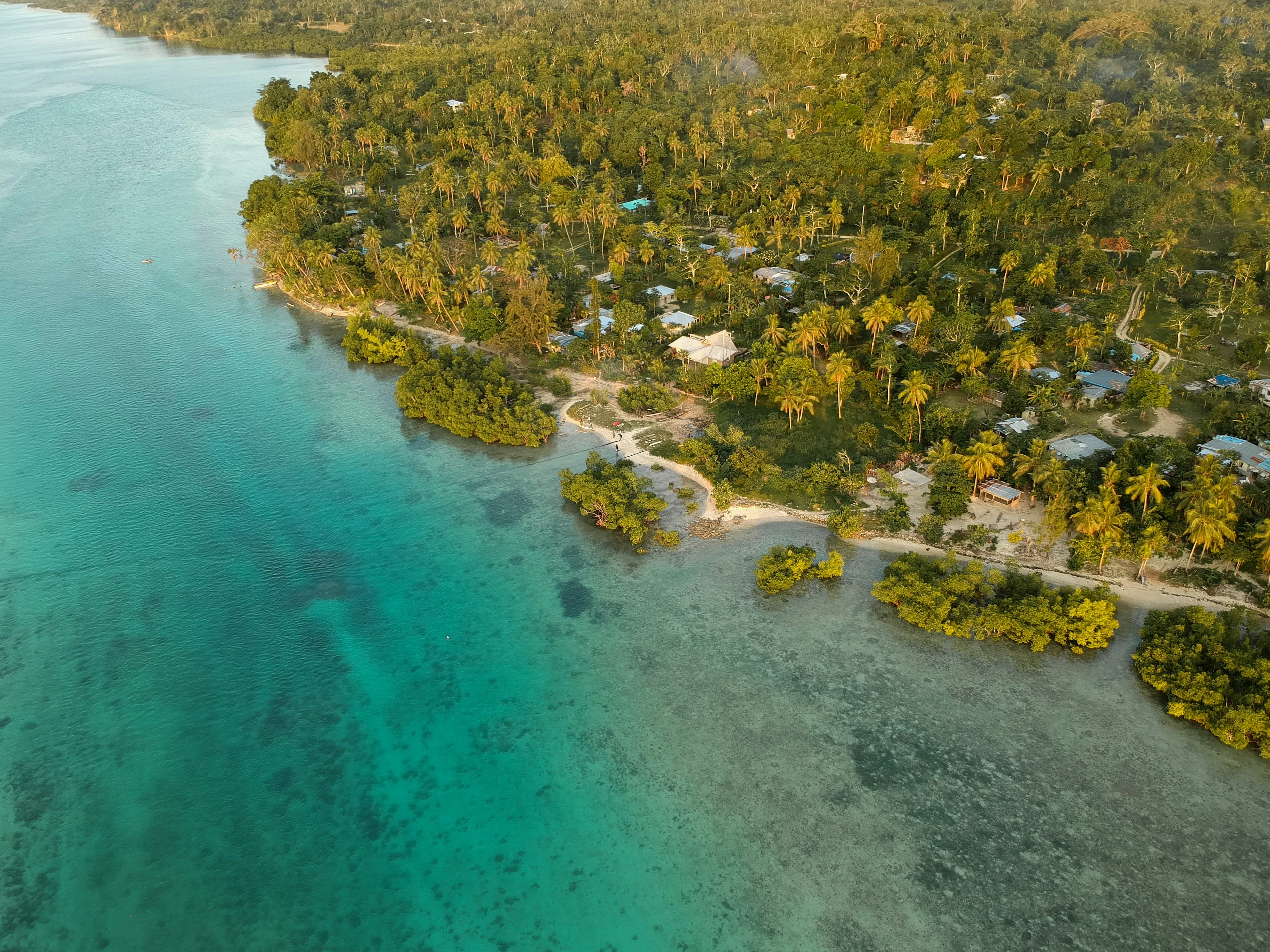
As world famous beaches go, Champagne Beach is one of the big hitters. In 2003, CNN ranked it number nine in its list of top 100 beaches and independent travel specialists permanently include it on their list of 50 best beaches worldwide. It’s one of the world’s greatest natural beauties: picture-perfect beach white sand, turquoise water and nothing – save for the occasional cow or curious turtle - around. With only coconut plantations and a few friendly locals to keep you company, this might just be the island of your dreams.The glorious name “Champagne Beach” was given to the island in the 17th century, when Pedro de Quirós believed he had reached the famous unknown southern land or the “Tierra Australis Incognita” (or Australia as we now know it). He believed the effervescent bubbles of volcanic origin that bubble up from the crystal clear waters were reminiscent of the bubbles of Champagne. Additionally, the coastline is shaped like an art deco Champagne saucer, so the name stuck! The beach is located on the largest yet least populated island in the 40-island Vanuatu archipelago, near the village of Hog Harbor on Espiritu Santo Island. If you want to venture beyond the beach, then Espiritu Santu is also famed for its blue holes. The island is home to some of the clearest waters on Earth, benefiting from natural filtering from underground limestone caves. Ride or paddle your way through emerald green rainforest amid the sound of birdsong for an experience that will make your soul sing.

An archipelago of smiles and warm welcomes Vanuatu enjoys a reputation as the happiest place in the world. With an abundance of stunning isolated beaches and endless reefs offering idyllic escape from the humdrum it’s easy enough to understand why. Green-clad volcanoes rise from the depths of the South Pacific Ocean creating 83 lush islands. Port Vila is the capital of this scattering of geothermal isles where mountains brood hot springs gurgle and thick rainforests sway. The sounds of water rushing - as you cut through rainforest trails - offers a clue that you’re getting close to the Mele Cascades - one of Port Vila’s most dramatic and spectacular natural sights. Jump in to experience the cool hit of the fall’s pure waters. Offshore islands offer exemplary snorkelling opportunities and glass-bottom boat rides give privileged windows into the swirling worlds of colour below the waves. Explore more of the islands to encounter traditional villages and Vanuatu island culture or to seek out secluded beaches of crystal-clear water - where worries you didn’t even realise you had will drift away. Set on Efate Island Port Vila is close to a selection of marvellous beaches like Eton Beach and Crystal Blue Lagoon. Visit one of the many restaurants serving food from across the globe to try fresh Spanish mackerel and meaty chunks of seared tuna. Or the adventurous can pound through the jungle on horseback kayak on the river or hook fish from the island’s sparkling waters.

The largest land of the archipelago Lifou is formed from a bed of fossilised corals and is the world's biggest raised coral atoll. Arrive on these enchanted shores to indulge in blissful beaches gentle wanders below swaying palm trees and endless bountiful diving opportunities. Swim among dense congregations of vivid fish flitting through the clear waters as you spot angelfish clownfish and the countless other varieties that occupy this rich ring of coral. Boasting some of the world’s best diving beginners and experts alike will be at home amid the packed life-filled seas. Enjoy the endless visibility of glass-like waters as you swim beside sleek sea turtles and rays over colourful coral beds that dazzle with their intensity. Breathlessly beautiful sweeps of the finest white sand roll along the coastline. Peng beach and Luengoni Beach are some of the finest and their privileged sands are met by electric blue waters and backed by luscious vegetation. The island's interior lagoon has been replaced with a dense cloak of forest and you can explore the hidden cave systems that spread like honeycomb. Lifou is dotted with tribal villages pretty churches and thatched beach huts - so learn a little more about the islanders' culture and buy handcrafted jewellery to remember your visit. Cool off and recover some strength with a coconut - freshly hacked open to give you access to the sweet refreshing liquid within.

Catch some shade in the city’s centre below Coconut Palm Square and absorb the vibrant fusion of French and Kanak cultures. Or take a leisurely open-air stroll along the waterfront where white boats bob and jostle on the lapping waters. Noumea is a perfect jumping-off point for serene island adventures too. Enjoy a voyage to the island paradise of Amedee Isl - a tiny green land with a narrow historic lighthouse rocketing up from its centre. Climb 247 steps for the stunning view of the blotchy blue waters all around. Or explore the waters to swim among turtles and orange clownfish. Set among the New Caledonian barrier reef there are incredible diving opportunities and glass-bottom boats offer you a dry window into the underwater world. Kick back on some of the softest sands imaginable and enjoy glorious sea views from the inviting shade of coconut palms. More island jaunts like Illot Maitre - which translates as the Master Isle – tempt where you’ll find idyllic strings of stilted bungalows laced across the crystal-clear shallow waters. Swim in the sparkling sea and sprawl across the white sand beaches that are waiting. Back in the city try soft coconut crab following a starter of New Caledonian prawns. Bougna is the traditional Melanesian meal of choice and a social experience where locals share a mix of vegetables and chicken in coconut milk slow-cooked for hours in a bed of banana leaves.

Days at sea are the perfect opportunity to relax unwind and catch up with what you’ve been meaning to do. So whether that is going to the gym, visiting the spa, whale watching, catching up on your reading or simply topping up your tan these blue sea days are the perfect balance to busy days spent exploring shore side.

The envied climate makes Brisbane a city of outdoor adventure activity and relaxation where days drift by surfing rollers or relaxing in the shade of swaying palms. While Brisbane may play second fiddle to Sydney and Melbourne at times it radiates a creative and contemporary energy offering visitors a refreshing combination of laidback waterfront luxury and urban sophistication. Sandy islands nearby provide scenic diving and oceanside relaxation opportunities while the city's animal santuaries offer opportunities to meet unbearably cute koalas and kangaroos. Brisbane’s impressive skyline of metallic cylinders rises high above the broad Brisbane River below which curves lazily through downtown. The rolling waves of the Pacific are close by but there’s something special about relaxing on soft sand in the very heart of the city on the beautifully executed South Bank Parklands man-made beach. With golden sand and shallow lagoon waters to cool off in it’s a dreamy spot to lie back with a book amid the landscaped gardens. Nestled in a river meander of its own Brisbane Botanic Park glows with colour tropical plants and wading ibis birds and is easily walkable from the Parklands. The South Bank is the cultural hub of city and houses the celebrated Queensland Gallery of Modern Art - a surreal and vibrant jaunt through contemporary Australian art. The city’s award-winning restaurants also serve up elite food matched with generous splashes of wine direct from the nearby Granite Belt’s wine regions.

Days at sea are the perfect opportunity to relax unwind and catch up with what you’ve been meaning to do. So whether that is going to the gym, visiting the spa, whale watching, catching up on your reading or simply topping up your tan these blue sea days are the perfect balance to busy days spent exploring shore side.


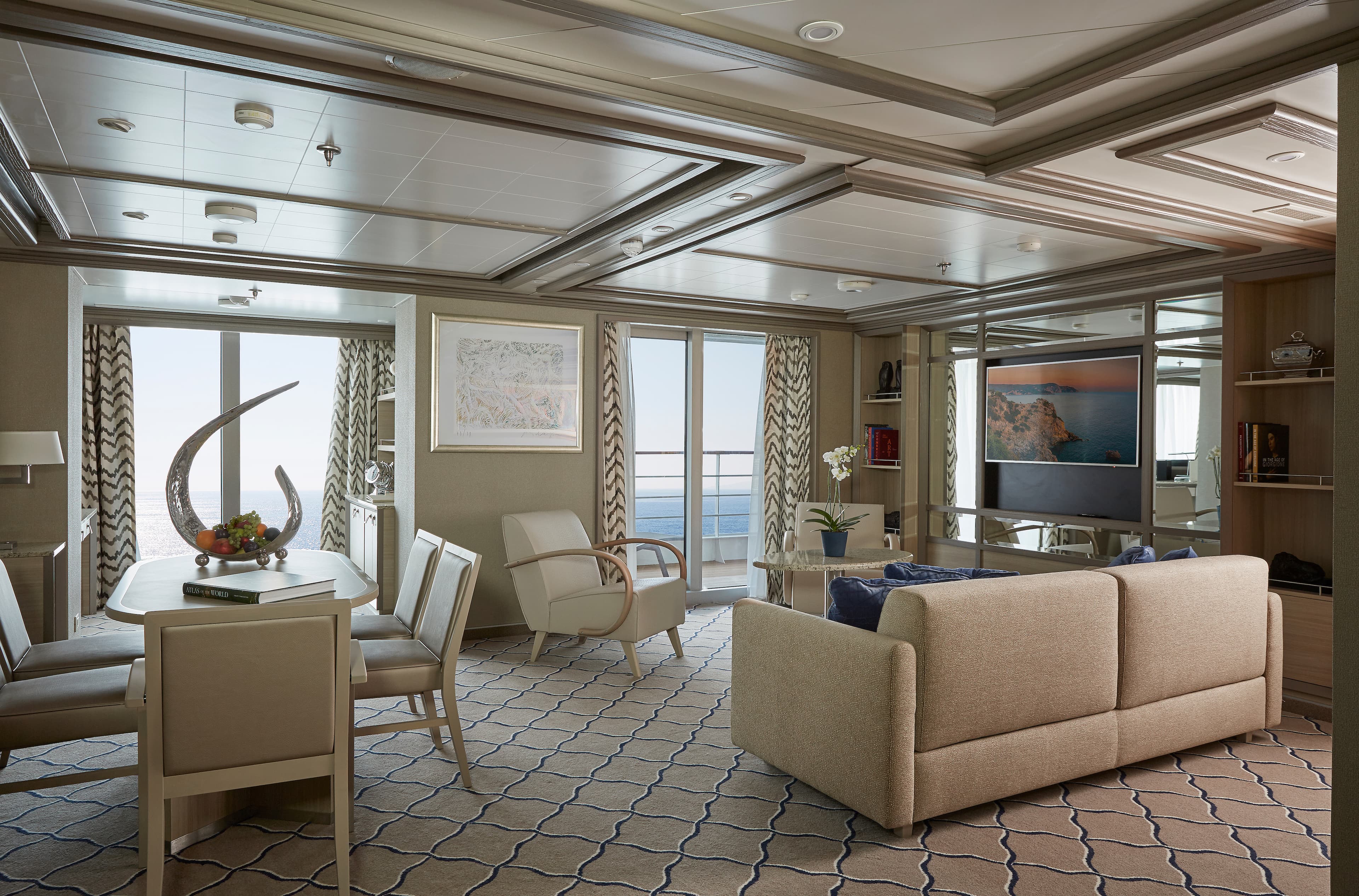
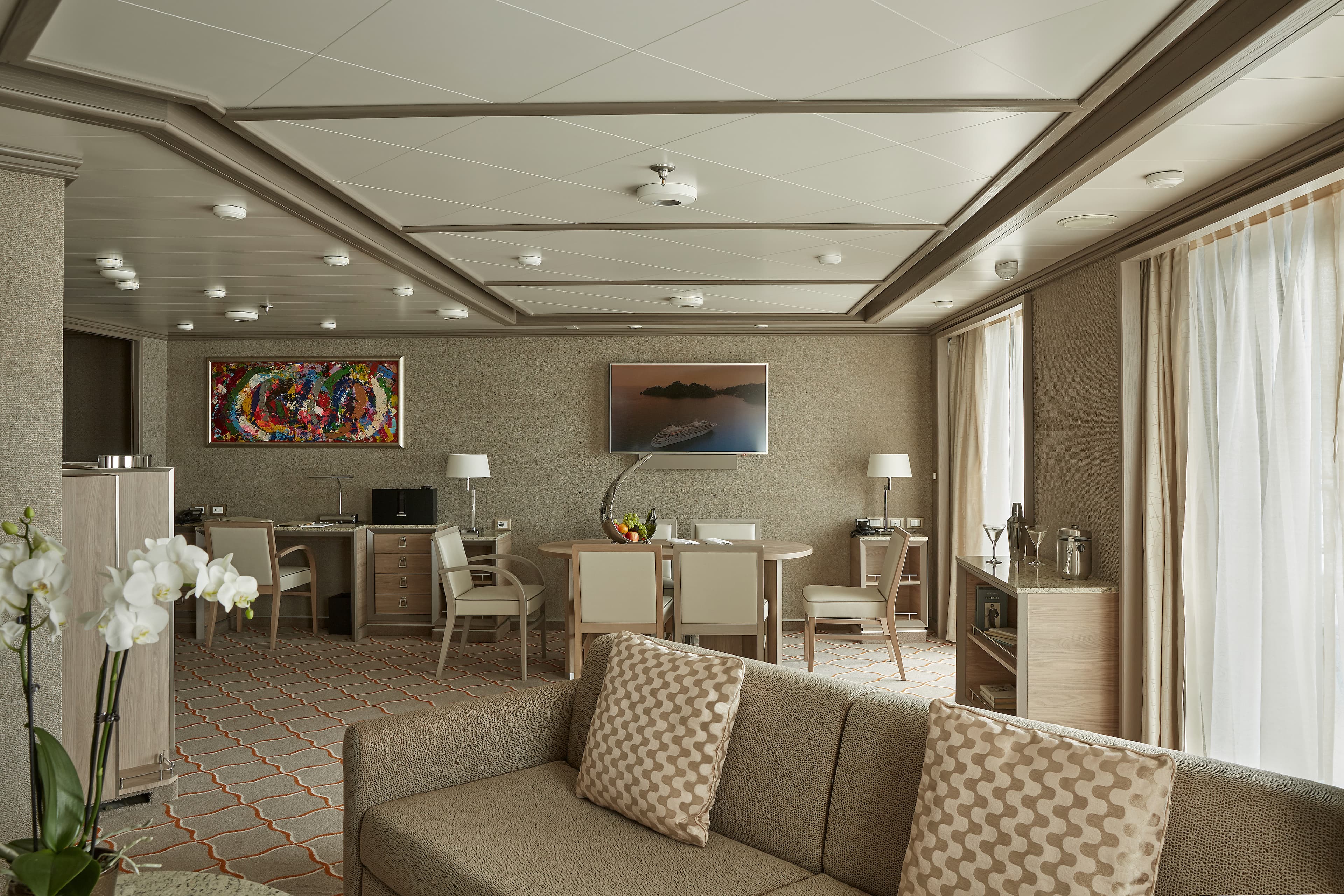
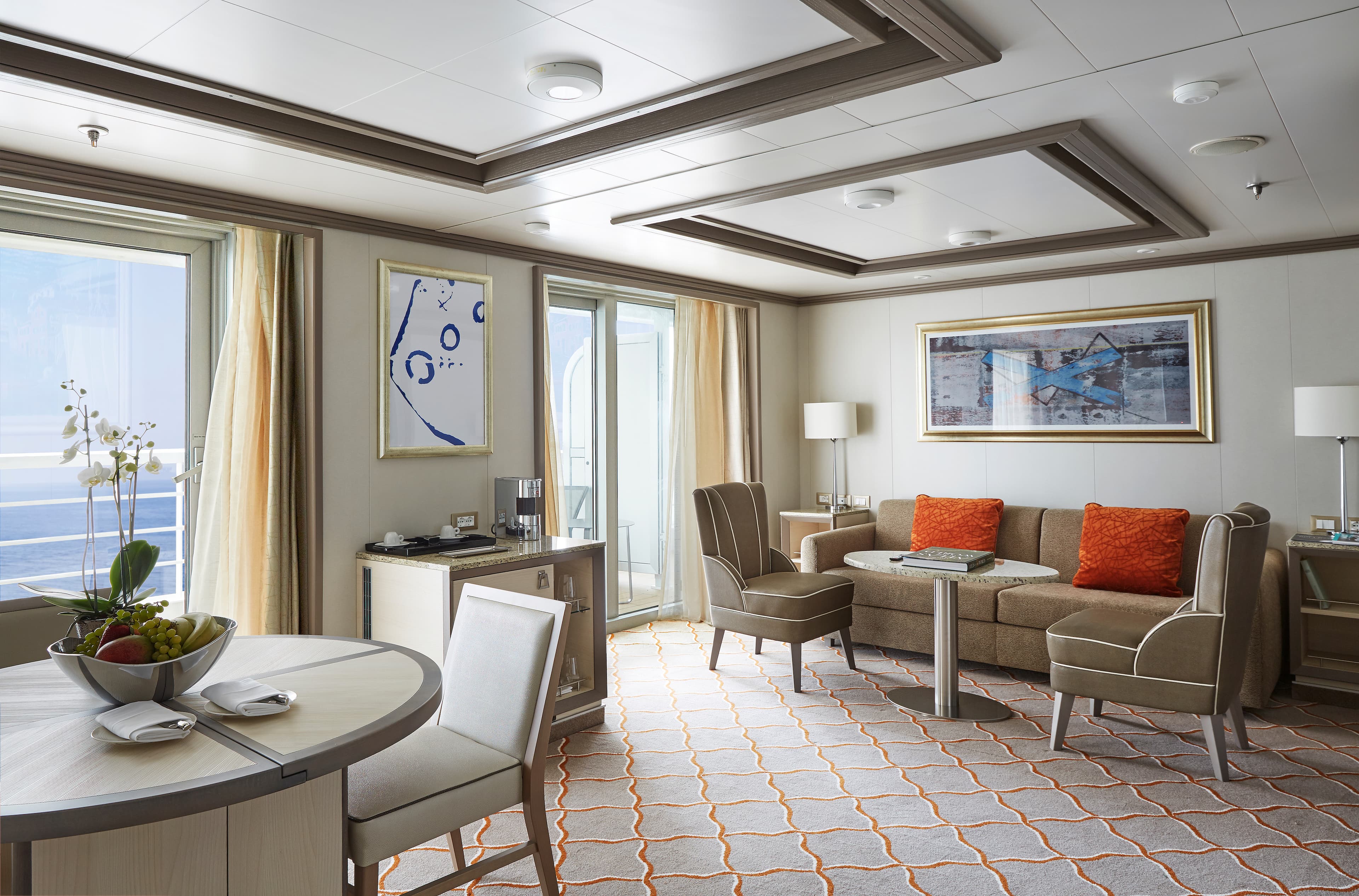
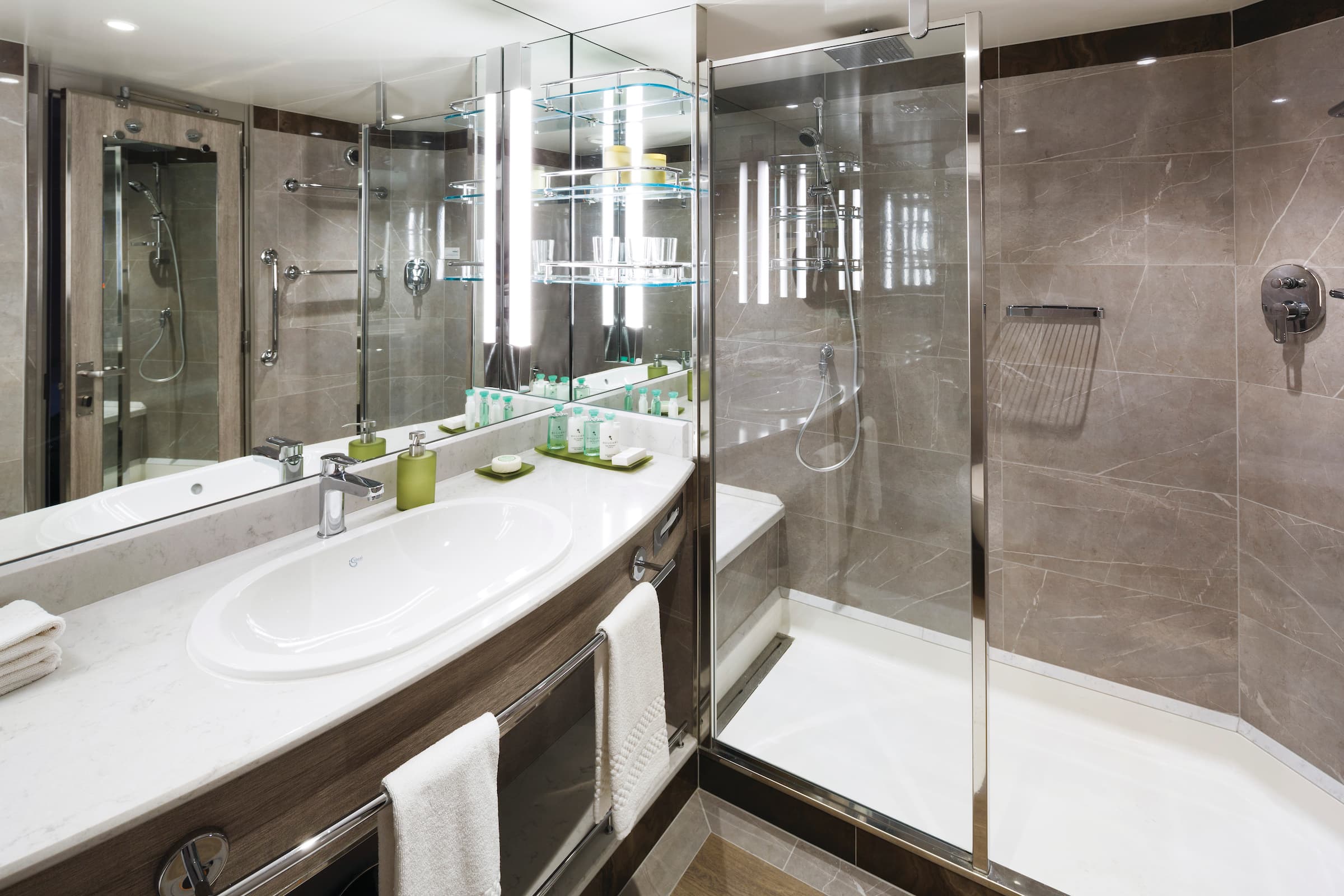
Discover the Owner's Suite, the epitome of luxury that accommodates families with one or two spacious bedrooms, offering a generous living area that spans 88 to 129 square meters, inclusive of a 12-square-meter teak veranda. Located mid-ship on deck 9, the suite exudes elegance with modern amenities such as a Bose sound system, a 55” interactive TV, and an Illy coffee machine, ensuring your comfort in every moment. The suite features a beautifully appointed living room, a separate dining area, a lavish king-size bed, and a walk-in wardrobe equipped with a safe. Indulge in the spa-like bathroom, complete with a double vanity, a whirlpool bath, and a separate shower. For entertainment, enjoy unlimited premium Wi-Fi, two large flat-screen TVs, and direct dial telephone services, alongside convenient USB-C chargers and dual voltage power outlets. Enhanced by exclusive services, the Owner's Suite offers butler service, complimentary laundry, a special dinner at La Dame, champagne upon arrival, and two hours of worldwide phone use per voyage segment. Amenities such as an espresso machine, a customizable pillow menu, plush bathrobes, and luxury bath products further elevate your onboard experience, making each moment unforgettable.


Indulge in the epitome of luxury with our Grand Suite, designed for the discerning traveler. Nestled at the front of the ship, this opulent suite offers breathtaking views and spans 137-146 sq m for one bedroom or 174-183 sq m for two bedrooms, inclusive of a spacious veranda ranging from 44-59 sq m. Step onto your private veranda furnished with sun beds, perfect for soaking in the sun, while the interior boasts a lavish seating area, a separate dining space, and elegantly appointed bedrooms. Each suite features a king-sized bed, a writing desk, and luxury mattresses, coupled with unmatched amenities such as a double vanity, whirlpool bath, and walk-in wardrobe with a personal safe. Stay connected with unlimited Premium Wi-Fi, two large flat-screen TVs, and a Bluetooth sound system, while enjoying butler service, complimentary laundry, and a welcome bottle of champagne upon arrival. A gourmet dining experience at La Dame and personalized service elevate your stay, ensuring an exquisite journey from beginning to end. Experience unmatched comfort in an exquisite escape like no other.


Introducing our exquisite Royal Suite, a true epitome of luxury and sophistication, with only two available on board. Spanning an impressive 105 square meters for a one-bedroom configuration, or 142 square meters for two bedrooms, this suite offers a spacious living area adorned with state-of-the-art entertainment systems and a sumptuous marble bathroom. It seamlessly combines elegance with comfort, featuring twin beds that can be combined as needed and an adjoining bedroom for family traveling. Situated on Deck 7 at the forefront of the ship, the Royal Suite boasts a serene teak veranda, a separate dining area, and a lavish living room. Exceptional amenities include a king-size bed, a writing desk, luxury bed mattresses, a plush walk-in wardrobe with a personal safe, and sophisticated media options with unlimited premium Wi-Fi and flat-screen TVs. Enjoy butler service, complimentary laundry, and a delightful dinner for two at La Dame during your stay, alongside a welcoming champagne reception. With thoughtfully curated features, such as a whirlpool bath, dual voltage outlets, USB-C charging stations, and an espresso machine, every comfort has been considered. Experience unparalleled service and private luxury in the Royal Suite, where you are truly treated like royalty.

Introducing the Silver Suite, our most popular offering and a hallmark of ultra-luxury cruising. Designed for the discerning traveler, these exquisite suites come in one-bedroom (73 sq m with a 12 sq m veranda) and two-bedroom configurations (104 sq m including a 12 sq m veranda), as well as wheelchair accessible options. Guests can indulge in sweeping ocean views from the private veranda or unwind in the spacious living room, creating a sanctuary at sea. Each suite features a king-size bed, a stylish writing desk, and a vanity table, complemented by luxury mattresses for a restful experience. Enjoy modern conveniences like unlimited premium Wi-Fi, dual flat-screen TVs, Bluetooth sound systems, and USB-C chargers. The lavish bathroom boasts a whirlpool bath, separate shower, double vanity, and a walk-in wardrobe with a personal safe. Butler service ensures attentive hospitality, complemented by complimentary laundry services and a champagne welcome upon arrival. Additional amenities include an espresso machine, customized pillow menu, stocked bar, plush bathrobe, luxury bath products, and thoughtful items like slippers and an umbrella. Revel in the epitome of cruising elegance with the Silver Suite, where every detail is tailored for your comfort and indulgence.


Discover the Deluxe Veranda Suite, a luxurious retreat spanning 36 square meters, including a charming 6-square-meter teak veranda. This elegantly appointed suite is situated mid-ship on decks 6, 7, and 8, offering unparalleled comfort after a day of exploration. Indulge in exclusive amenities such as 24-hour butler service, a well-stocked mini-bar, and a cozy sitting area. The suite features a queen-size bed adorned with luxury mattresses, a writing desk, a walk-in wardrobe with a personal safe, and a lavish bathroom with a separate shower and full-size bath. For entertainment, enjoy unlimited standard Wi-Fi, a large flat-screen TV with an interactive media library, and conveniently placed USB-C chargers. Guests will appreciate the complimentary champagne upon arrival, a customizable pillow menu, plush bathrobes, and luxury bath amenities. The layout allows for one additional guest to rest comfortably on a sofa bed in the reception area. Immerse yourself in the exquisite charm of the Deluxe Veranda Suite, where unforgettable memories are made.


The Superior Veranda Suite offers an unparalleled blend of luxury and comfort, ideally situated on decks 7, 8, and 9 towards the forward section of the ship. Spanning 36 square meters, including a private 6-square-meter teak veranda, this elegant suite features a spacious sitting area and an exquisite marble bathroom. Guests will enjoy the convenience of 24-hour room service provided by a dedicated butler, enhancing the overall experience of relaxation. The suite is furnished with a queen-size bed adorned with luxury mattresses, a writing desk, and includes a comfortable sofa bed located in the reception area for additional guests. State-of-the-art amenities such as unlimited Wi-Fi, a large flat-screen TV with an Interactive Media Library, and dual voltage outlets are standard. Furthermore, guests can indulge in a personalized arrival with champagne, a pillow menu, and a well-stocked refrigerator tailored to preferences. Overall, the Superior Veranda Suite ensures a lavish escape, inviting you to unwind and savor every moment spent onboard.


The Classic Veranda Suite offers an exquisite retreat for discerning travelers, featuring an ideal lower-bow location. Spanning 36 square meters, including a 6-square-meter veranda, this suite provides a serene escape with luxurious bedding options, either twin or queen, ensuring an unparalleled night’s sleep. The inviting seating area is perfect for in-suite dining, while the highlight is undoubtedly the private veranda that invites you to savor scenic views. The suite is thoughtfully equipped with amenities such as a spacious bathroom with a separate shower and full-size bath, a walk-in wardrobe with a personal safe, and a writing desk. For your entertainment, enjoy unlimited standard Wi-Fi, a large flat-screen TV with an interactive media library, and convenient USB-C charging options. Additional services like butler service and a welcoming bottle of champagne enhance your experience, alongside a personalized refrigerator bar, a pillow menu, plush bathrobes, and luxury bath amenities. Indulge in refined comfort and elegance aboard the Classic Veranda Suite.

Experience unparalleled elegance and comfort in the Panorama Suite, a spacious 31 sq m haven designed for relaxation as you journey through breathtaking destinations. Adorned with beautiful furnishings and large floor-to-ceiling windows, the suite offers stunning ocean views at any time of day. Positioned on Deck 9 at the forward section of the ship, it serves as an ideal companion to a Silver Suite for larger groups or functions beautifully on its own. The suite features a variety of luxurious amenities, including a queen-size bed with luxury mattresses, a writing desk, a separate shower, and a full-size bath. Additionally, guests can enjoy a spacious sitting area, a walk-in wardrobe with a personal safe, and standard vanity. Stay connected with unlimited standard Wi-Fi, a large flat-screen TV equipped with an interactive media library, and direct dial telephone capabilities, alongside convenient wall-mounted USB-C chargers. Onboard, indulge in personalized services, such as butler service and champagne upon arrival, while enjoying tailored comforts like a pillow menu, a fully stocked refrigerator and bar setup, plush bathrobes, and luxurious bath amenities. Here, every detail is curated for your ultimate relaxation and enjoyment.

The Vista Suite is the epitome of comfort and elegance, featuring stunning ocean views that perfectly complement the spacious 32 square meter layout. Located on Deck 4, this forward suite allows guests to awaken to the soothing sounds of the sea and enjoy breakfast against a picturesque backdrop. Designed for relaxation, the suite boasts cozy sofas, a state-of-the-art in-suite entertainment system, and a separate sitting area. For those with mobility needs, select Vista Suites are generously sized for easy accessibility. Indulge in luxury with a queen-size bed, a writing desk, and high-end mattresses, while the walk-in wardrobe provides a personal safe for your valuables. The suite is equipped with unlimited standard Wi-Fi, a large flat-screen TV, direct dial telephone, and convenient USB-C chargers. Guests are treated to exceptional service, including a dedicated butler, a bottle of champagne upon arrival, and a curated pillow menu. Additional amenities such as a well-stocked refrigerator, plush bathrobes, luxury bath products, and complimentary slippers ensure an exquisite experience at sea. Discover your home away from home aboard the Vista Suite, where every detail is tailored to elevate your journey.